Find the right way to learn — before you pay for it.
In-depth, honest reviews and head-to-head comparisons of the language apps and courses worth your time and money.
Reviews
Deep dives into Pimsleur, Babbel, Duolingo and more, by language.
Comparisons
Pimsleur vs Babbel, vs Duolingo, vs Rosetta Stone — which wins.
Best apps
The best apps to learn Spanish, French, Japanese and beyond.
Guides
How long it takes, where to start, and how to stick with it.
Language courses are unusually hard to judge before you buy. The free trial is short, the marketing all promises fluency, and the thing that actually decides whether you get there — how much you speak out loud in a normal lesson — is never in the sales copy. So people pay for a year of the wrong tool and conclude they are bad at languages.
This site exists to make that decision boring. We work through each course, compare them head to head on the same criteria, and publish the price you really pay after the introductory offer ends. Every review states plainly who should skip the product, because a review without one is just an advert.
Start with the decision you are stuck on
- “Which app should I get?” → the best language learning apps of 2026, ranked on speaking, grammar, vocabulary and price.
- “Is it X or Y?” → the head-to-head comparisons, one pair at a time.
- “Is this one worth the money?” → the full reviews, with real pricing and an honest verdict.
- “How long will this take me?” → the learning guides and the free level tests and calculators.
Pimsleur reviews
Start here — our complete take on the audio method, plus every language we've reviewed.


Pimsleur: pricing & deals
The free trial, the real cost, and every honest way to save before you pay.
Best apps by language
Ranked round-ups matching each app to the learner it suits best.



Competitor reviews
Honest reviews of the other big names, and how they stack up against Pimsleur.
Rosetta Stone review
Read full review → Is Rosetta Stone worth it?
Read the verdict →
How much does Rosetta Stone cost?
See pricing →
Rosetta Stone lifetime
See the price →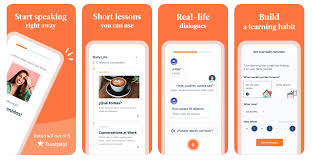
Babbel review
Read full review →
How much does Babbel cost?
See pricing → Is Babbel worth it?
Read the verdict →Head-to-head comparisons
Two apps, one winner — which fits your goal.

Free language tools
No sign-up — check your level or plan your timeline in minutes.


How we review
Every product goes through the same five checks, so a 4.1 means the same thing on one page as on another: what a lesson actually makes you do, how far the course can realistically take you, the true price after the introductory year, how many languages get real depth rather than a token course, and which learner should avoid it. Ratings are not graded on a curve — doing one thing brilliantly does not excuse doing the rest badly. The full method is on our about page.
We are reader-supported and independent: some links here are affiliate links, and none of them change a score. We are not owned by, or affiliated with, any company we review, and we update pages when prices and plans change. Our affiliate disclosure spells out exactly how that works.
Common questions
Which language learning app is the best?
There is no single best app, because the apps are good at different things. For actually speaking, an audio-first course like Pimsleur wins. For grammar explained clearly, Babbel. For a free daily habit, Duolingo. For immersion without translation, Rosetta Stone. Our best language learning apps round-up ranks all six by what each one does best.
Are paid language courses worth it over free apps?
They are worth it if you want to speak rather than recognise. Free apps are excellent at building the daily habit and a passive vocabulary, but they rarely make anyone conversational on their own. Most learners who reach a genuine B1 either pay for a structured course or add real conversation practice — usually both.
How long does it take to become fluent in a language?
For an English speaker, the Foreign Service Institute puts Spanish and French at roughly 600–750 study hours to professional working proficiency, German at around 900, Russian at around 1,100, and Japanese, Korean, Mandarin and Arabic at roughly 2,200. Conversational ability arrives at a little over half those numbers. Our free calculators turn that into a date from your minutes a day.
How does SpeakFluentReviews make money?
Some links on the site are affiliate links, so we may earn a commission if you subscribe through them, at no extra cost to you. We are not owned by or affiliated with any company we review, and commissions never change a rating or a ranking — every review names the learner it is wrong for.