Is Babbel Worth It?
The short answer: yes, for the specific person who has tried a free app, plateaued, and worked out that the problem was never motivation — it was that nobody ever explained anything. Babbel is the most straightforwardly educational of the mainstream apps: it teaches grammar in English, in small doses, attached to dialogue you would actually say. It is worth less to you if you want an unusual language, if your only goal is speaking, or if you have not yet built a daily habit for a paid course to sit on top of.
This page is the money decision. For the full walkthrough of how the lessons work, see our Babbel review.
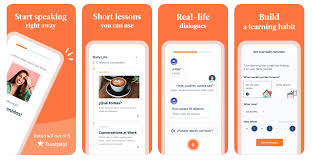
The verdict in one table
| If this is you… | Is it worth it? |
|---|---|
| You want to understand grammar, not guess it | Yes — this is Babbel's core strength |
| You have tried a free app and stalled | Yes — the structured path is the fix for exactly that |
| You are learning a European language | Yes — Spanish, French, German and Italian are the deepest courses |
| You want conversation practice with a teacher | No — Babbel Live ended for individual learners in June 2025 |
| Your main goal is speaking fluently | Partly — pair it with an audio course |
| You want a language outside the main 14 | No — the catalogue is narrow. Pimsleur covers 50+ |
| You want it free | No — start with Duolingo and come back when you stall |
What you are actually paying for
The thing Babbel sells is explanation, and it is easy to undervalue until you have gone without it. When a Spanish sentence puts the pronoun somewhere surprising, Babbel stops and tells you why, in English, in two sentences, and then makes you use it. Free apps mostly let you discover the rule by being wrong repeatedly. For a lot of adults that difference is the entire reason one course works and another does not.
The second thing you are paying for is a route. Lessons are short, sequenced, and built around situations rather than word lists, so there is a defensible answer to "what should I do today". That sounds mundane next to streaks and leaderboards, but it is why people who switch to Babbel after stalling elsewhere tend to keep going: the app has an opinion about what comes next.
Where it runs out of road
Two limits, both worth knowing before you pay.
The first is speaking. Babbel includes speech exercises and they are fine, but you are still mostly typing, selecting and reading. You will understand a great deal more than you can say, and that gap widens the further you get. If your goal is specifically to talk, an audio-first course does that job better — our Pimsleur vs Babbel comparison is the direct answer to that question.
The second is the catalogue. Babbel does around 14 languages and the depth is uneven: Spanish, French, German and Italian are properly built out, while the smaller courses are noticeably thinner. If you want Korean, Mandarin, Russian or anything beyond the European core, you will be better served elsewhere.
There is also a ceiling. Babbel comfortably covers beginner to intermediate and then stops; it is not where you go to move from good to excellent.
Is it worth the price?
Babbel costs $8.97 a month on the annual plan, rising to $15.25 on the three-month plan — billed as $107.64 for a year or $45.75 for three months — plus a one-time $299 lifetime plan covering the whole catalogue. Our full Babbel pricing breakdown has every plan; two things follow from those numbers.
First, month-to-month is the worst way to buy it. It is the highest price for the plan you are least likely to finish, and language learning rewards the long horizon that monthly billing quietly discourages.
Second, the lifetime plan is only good value once you are sure. At $299 against $107.64 a year it breaks even a little under three years out — genuinely better than renewing annually if you are still studying then, and it removes the yearly decision that ends a lot of learning streaks. But three years is a real commitment to a method you may not have tested properly yet. Take the annual plan, find out whether being explained to suits you, and buy lifetime a year in if it does.
How it compares on value
| App | Best at | Typical price | Worth it if… |
|---|---|---|---|
| Babbel | Grammar explained clearly | $15.25/mo or less annually | You stalled on a free app |
| Pimsleur | Speaking out loud | ~$19.95/mo | Your goal is conversation, fast |
| Rosetta Stone | Pronunciation, immersion | $19.99/mo, $159/yr, or ~$179 lifetime on sale | You are a beginner who wants a gentle start |
| Duolingo | Free daily habit | Free / ~$7/mo | You need consistency before you need a course |
The two comparisons that settle this for most people are Babbel vs Duolingo (is paying worth it at all?) and Rosetta Stone vs Babbel (explained versus absorbed).
Our verdict
Babbel earns 4.0 out of 5 and is the easiest paid app to recommend to the largest number of people — not because it is the best at any one thing, but because it is competent at the thing most learners are actually missing. Buy an annual plan rather than monthly, expect it to take you to a confident intermediate rather than to fluency, and add speaking practice from the start through a tutor, conversation partner or audio course.
If you are not sure where you are starting from, our free Spanish and French level tests take three minutes, and the learning guides will tell you how many hours your language realistically needs.
Frequently asked questions
Is Babbel worth it?
Babbel is worth it if you want to actually understand the language rather than pattern-match your way through exercises. Its lessons explain grammar in English, build in short dialogues, and follow a coherent path from beginner to intermediate — which is precisely what free apps do not do. It is less worth it if you want a language outside its main 14, if your only goal is speaking fluency, or if you have not yet built the daily habit that any paid course depends on.
Is Babbel better than Duolingo?
For learning, yes; for showing up, no. Babbel teaches grammar directly, uses more useful adult dialogue, and moves faster toward being able to hold a conversation. Duolingo is free and far better at getting you to practise every day. The honest answer is that Babbel is the better course and Duolingo is the better habit, which is why plenty of people use Duolingo to stay consistent and Babbel to actually progress.
How much does Babbel cost?
As of July 2026, Babbel costs $8.97 a month on the twelve-month plan (billed as $107.64 for the year) or $15.25 a month on the three-month plan, and it also sells a lifetime subscription for a one-time $299. A subscription covers all the languages Babbel offers rather than one. Prices vary by country and Babbel tests them regularly, so check the current offer before subscribing — our full Babbel cost breakdown has the detail.
Is Babbel lifetime worth it?
At a one-time $299 against $107.64 a year, the lifetime plan breaks even at a little under three years — so it is worth it only if you are genuinely confident you will still be studying that far out. That is a long commitment to a method you may not have tested properly. Take the annual plan first, and buy lifetime a year in if Babbel has stuck; buying it on day one is the most common way to overpay here.
Is Babbel Live still available?
Not for individual learners. Babbel discontinued its consumer live classes after 30 June 2025. Teacher-led classes remain available through Babbel for Business, but an individual subscriber who wants live conversation needs a separate tutor or conversation service.
Can Babbel make you fluent?
Babbel can take you to a solid intermediate level — comfortable with everyday conversation topics and the grammar behind them — but no app makes you fluent by itself. Its courses run out before the advanced levels, and fluency requires unscripted conversation with real people. Treat Babbel as the structured middle of the journey rather than the whole of it.